Wednesday, January 18, 2012

France's nightmare realized:Is there life after downgrade for the EU

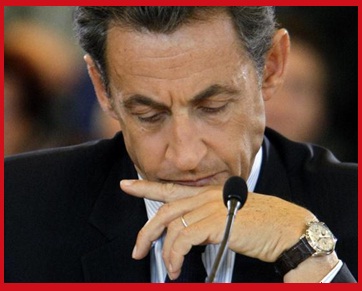
It is likely the one thing that kept France’s Prime Minister up at night. Protecting France’s credit rating was to become Sarkozy’s greatest challenge of the past 4 months, nevertheless, Sarkozy saw it coming. France and the other EU leaders were hoping to slide under the radar for a bit longer, before S&P focused its attention on the financially stressed members.

I’m sure that the historic downgrade of the US’s debt last year, made it all the more realistic for France. Well, last Friday was the day of reckoning for the Euro-zone, as members suffered downgrades on their debt. This was inevitable given the unresolved financial crisis which has consumed the EU in the past 18 months. Standard & Poor’s swooped down and left France and Austria stripped of their pristine Triple-A rating. It did not stop there, seven others EU members were downgraded including Italy, Portugal. Germany is the EU’s # 1 economy, and it was able to retain its triple-A rating. The anticipated, but dreaded downgrade of France’s debt, being EU’s #2 economy, will undoubtedly create a huge dilemma for the EU’s bailout plan.

As the downgrade of the European Union's #2 economy sinks in in the next couple of days, global perception of the European Union’s ability to bail itself out, leaves potential investors concerned. This of course translates to higher cost of borrowing. The entire bailout plan is in hinging on the EU’s ability to bounce back from this downgrade and swiftly move toward executing the bailout plan. The sooner the wheels begin turning toward resolving the issues, the better.

Back to Home Page

K. Reilly
The Cohn-Reilly Report
www.Facebook.com/Cohn.Reilly

Thursday, January 5, 2012

Blue Chips in the Red: Kodak

In the digital world of imaging, the hardest hit in this sector, which should come as no surprise, was Kodak. The Wall Street Journal reported that Kodak may be filing for bankruptcy protection in the months to come. In the past three years, Kodak has incurred losses in 9 out of 12 quarters. For the 3rd quarter of 2011, Kodak's losses were estimated at $222 million, which had investors running for cover. Needless to say, their stock fell sharply last year. Although the company stock began the year trading at $3.00, Kodak's shares are presently fluctuating below .50 cents. Consequently, the New York Stock Exchange warned that they will move to delist Kodak if their stock price remains below $1 for over 6 months. Kodak is not quite in the "red" yet, but if the company continues operating at the same rate of quarterly losses they experienced in the third quarter of 2011, it is only a matter of time.

I remember purchasing stock in the company when I was about 18 years old, and I must have paid over $40 a share. I sold my Kodak shares when the price dipped to $23.00. That's when I realized that I really didn't have the stomach for the trading the market.

The Iconic Blue Chip, which had been a in the forefront of the imaging products and supplies for over 130 years, has lost its grip on the cutting edge. The once stellar company is struggling to reinvent itself in the new age of camera phones, desktop publishing, , and the digital transport, upload and storage of images. Let's face it, when was the last time you bought film, or dropped off film to be developed? The impact of the ever-changing technical environment couldn't be more evident, as Kodak's valuation has suffered an 80 percent loss in the past 52 weeks. Clearly, digital advancements, and steep foreign competition has taken its toll on Kodak, making them look more like a dinosaur than a ever. By June of 2011, the company's year-end target of $1.6 -to- $1.7 billion was revised to $1.3 - to- $1.4 billion, as a reflection of their reduced expectations. The third quarter earnings report was a dismal account of continued losses, shrinking their cash reserves to $862 million, from $957 million in the 2nd quarter. As it stands, Kodak is sitting on only 10% reserves, well below standard practice.

To tell the whole story, or at least put the current events in perspective, the eminent day of reckoning began nearly 12 years ago, as the tides started to shift away of processing, printing and "developing" photo images. Resisting the digital revolution, or buying time, Kodak began giving away Free Film with every film development pick-up. This was a good, albeit temporary strategy to insure repeat business. The disposable cameras was a wonderful product with a short life span,(no pun intended) but it did help to sustain revenues, and as reasonable amount of cash flow while the CEO and the his think-tank tried to come up with new "relevant" products and services. Alas, this is going to be a fight for survival with much at stake, and Kodak was seemingly not up to the challenge - or is it? Whatever the case, in the past decade, Kodak lost 95% of its value to the industry competition which bought new age, digital savvy products to the market.
Part 1 of 2

For Part 2, Click Here

K. Reilly
The Cohn-Reilly Report

www.Facebook.com/Cohn.Reilly

Thursday, December 29, 2011

Corzine's Blind Ambition: In case of Emergency, Break Glass

MF Global Files for Bankruptcy, Corzine resigns and turns down a $12 million severance pay. Wall Street analysts already knew how over-loaded the company was with Euro debt, so it was not a surprise outcome, by any means. However, as the story began to unfold and the facts surrounding the collapse started to unravel, suspicion grew about the probability of foul play. There were more questions than answers, and that's always a red flag. Once customer funds were discovered missing, and an SEC investigation revealed that a large sum of money was transferred into an account overseas, just two days before MF Global filed for bankruptcy, it was clear that something was terribly wrong here.

For the second time in December, Jon Corzine, former head of the now defunct MF Global, met with the senate to further explain his involvement with the missing customer funds. This time, he was accompanied by two MF Global executives, COO, Bradley Abelow and CFO, Henri Steenkamp, who also claimed to know nothing about the money. I find this very curious, since most brokerage firms have policies in place that limit check writing and transfer-of-money authority to upper management, with additional authorization from the CFO, or Treasurer in his or her absence. The Senate hearing did not turn up anything that would satisfy investigators or investors. Nevertheless frustrated Farmers (primary investors in land commodities) were able to voice their disdain for MF Global, and one in particular was quoted as saying "What they call 'unlawful comingling' on Wall Street is called 'stealing' back on Main Street,"

Jon Corzine admitted that there was a "break glass" contingency plan in place, but did not disclose the details of the emergency plan. After questions intensified, he denied that raiding the customer funds was one of the recommendations in the emergency plan. According to Corzine, he did not know what happened to the money, and proclaims that he did not direct anyone to misuse customer funds. Corzine tried his best to convince the Senate Agricultural Committee that he did not "intend" to break any rules concerning the handling of customer funds, with respect to keeping customer funds segregated from the firm's money. This is reference to the requirement of all commodities and futures trading firms to segregate customer funds from company money. According to the CMEgroup.com, (Watchdog for Commodities and Futures Industry) segregating the funds protects investors in the event of defaults or bankruptcy. This regulation has a major advantage for investors, because when a company files for bankruptcy (as in the case of MF Global) , investors are last on the list, behind creditors, to see any of their money - particularly because it's next to impossible to identify how much of the company's assets belongs to the customers. Segregated funds facilitate the process of identifying which accounts belong to investors, thus investors will be able to recoup their funds without much delay. Apparently the "Segregation of Funds" regulation was not practiced at MF Global. Corzine went so far as to explain that perhaps an employee misinterpreted his instructions in an effort to try to save the company. The former CEO conveyed to the Senate subcommittee that he was not aware of any problem with segregated funds until October 30th, the day before they filed for bankruptcy.

In a new twist to this already redundant story of fraud, greed and entitlement, the Federal Authorities investigating the collapse of MF Global are now turning their attention toward one of the Wall Street watchdogs. Since MF Global was a Commodities brokerage firm, their primary regulator should have been the CME Group. The Commodities Futures and Exchange Commission is leading the investigation to examine CME's conduct before MF Global filed for bankruptcy protection. If the CME Group is the commodities regulator safeguarding customer’s money, what were they doing instead?

The downfall of MF Global (and Corzine’s career) is yet another display of Wall Street greed and deception. The bottom line is, Corzine should be held accountable regardless of whether or not he "directed" anyone to move funds. In his effort to exonerate an employee, he painted a vivid picture of the company culture. The firm's inattention to compliance, without regard for their customers" protection is inexcusable. As I've stated previously in an article concerning Corzine and MF Global, the fact that he turned down the severance pay is almost an admission of guilt for some aspect of the company's downfall. I’ll continue watching this case closely to see where the investigation of the CME Group and the search for the missing $1.2 billion leads. Fortunately, the Wall Street Journal reported that the judge overseeing the bankruptcy case has approved $4.1 billion to be returned to the customers, of which $2.2 billion in frozen customer accounts will be released.

Cohn-Reilly Report posted an article about the obvious under story of misguided ambitions of Jon Corzine, prior to the reports of mission funds. Corzine’s blind Ambition

Back to Home Page

K. Reilly
The Cohn-Reilly Report

www.Facebook.com/Cohn.Reilly

Monday, December 19, 2011

Europe's Deficit Deal Takes Shape: Uncertainty Lingers

The highly anticipated Euro-zone deal, which we thought would positively impact the market failed to do so. There was a knee-jerk reaction to the news with a slight up-tick in the DOW, which indicates bolstered confidence - but this was short lived. As it turned out, before the end of the trading day the Euro had fallen, along with a tripple digit drop in stocks. Uncertainty rippled through the markets creating a domino effect, that finally resulted in a rise in borrowing costs for Italy and Spain alike. Ultimately, it appears that investors were decidedly unimpressed with the Summit deal to control the Europe's fiscal crisis. Economists believe the market rally was deflated due a resurgence of uncertainty surrounding the bailout pact, as it did not include unlimited backstop for the Euro currency.

As the saying goes; "the devil is in the details". The Euro-zone deficit deal has been structured, but economists, investors and stakeholders know its only the beginning. According to Frances's President, Sarkozy, the legal parameters and compliance for the new accord to reinforce the bailout rules are expected to be worked out before Christmas. The longer it takes to put this put this chapter behind them, the more chance for erosion of confidence, currency, and credit rating.

Back to Home Page

K. Reilly
The Cohn-Reilly Report

www.Facebook.com/Cohn.Reilly

Wednesday, November 23, 2011

Sarkozy's New Challenge: Protecting France's Credit Rating

Given the fact that the European Union's recovery is riding on the full faith and credit of a select few of the strongest union members. Sarkozy ia facing yet another challenge as guardian of France’s credit rating. Particularly in light of fact that France is the primary guarantor for the bailout program.

Hope for an improved fiscal outlook for both Greece and Italy, allowed markets to exhale this month. This was fueled by the progress Greece made toward naming a new president, and the new bail-out plan. Many markets have already made back much of the losses over the past few months, but volatility continues to be a concern. Attention was temporarily transferred away from Greece, and the growing concern about Italy after S&P erroneously issued a warning that they may downgrade France’s rating. In an instant, the overly sensitive market reacted, resulting in higher bond yields for France’s debt, marking a 4 month high.

For the bailout to work, the euro-zone requires other triple -A nations to step up and increase their guarantees. The bailout fund is structured to hold a triple-A-rating, but this is based on the underlying strength of France’s credit rating. France is the second largest economy in the European Union, following German. However, as far as the resolution to the EU fiscal crisis, France is the blue-chip guarantor - representing the Union’s ability to navigate themselves out of the financial hole. Accordingly, a reduced rating France, will undoubtedly have an impact on the firepower of the fund.
Frances President, Sarkozy, has made it his mission to protect France’s credit rating. The Wall Street Journal reported that Sarkozy’s has made guarding their Triple-A credit rating a “battle ground for the coming presidential elections in the spring” Sarkozy unveiled, not one, but two austerity packages since late august in an effort to signal to investors that France can and will meet its deficit targets.

Back to Home Page

K. Reilly
The Cohn-Reilly Report
www.Facebook.com/Cohn.Reilly

Tuesday, November 8, 2011

Corzine's Blind Ambition: The Collapse of MF Global

MF Global is essentially in ICU, and nothing short of a miracle will save the company as we know it. Who was at the wheel when the company crashed and burned last week? Corzine. Corzine, former governor of New Jersey, who was once the head of Goldman Sachs, went back to his roots on Wall Street to head MF Global. As CEO of MF Global, Corzine, built the company to $41 billion business. It sounds like another Wall Street dream, but this success story, quickly turned into a nightmare, for the company and for its CEO.

The announcement came Thursday, November 3rd, that Corzine is stepping down as CEO on the heels of an investigation of the company’s unraveling. Their troubles started when the European crisis began to impact the company’s bottom line, since MF Global was heavily invested in European bonds.

MF Global is the first big financial company to tank at the hands of the Euro -crisis. The company’s Partners pulled back with increased concerns about their Euro bond exposure, which descended into a severe cash deficiency. MF Global’s investment in Spain, Italy and Portugal bonds had amassed to $6 billion in debt. The firm’s stock declined 66% last week when the company reported its worst quarterly losses ever. Meanwhile,the transatlantic continent’s gloomy future is hanging in balance, and sure to bring MF Global to its knees. The swift sell-off of its stock precipitated the company filing for bankruptcy. To put this horror story in perspective according to bankruptcydata.com, the MF Global bankruptcy filing is the 8th-biggest financial institution in the US, placing them over Chrysler, (in 2009), but smaller than Lehman Brothers.

It is beginning to appear that Corzine set out to redefine MF Global's Business Model, and aggressively redirect the company’s focus and trading objectives in an effort to create his own Goldman Sachs. He wanted to build an international empire, only he failed to consider the global economic mayhem, and particularly the crisis unfolding across the Atlantic, where Corzine wanted to heavily invest. The financial discord in Europe was no secret, so what was he thinking? A cocktail of insatiable greed and ambition tends to have a blinding effect on the soul.

Behind the scenes, the Wall Street Journal reported that MF Global was seeking investors or buyers to alleviate the cash crunch. But alas, there were no takers and unfortunately no alternatives emerged before the regulators’ deadline. The company was subsequently delisted. This is a classic case of an overly eager, unethical CEO with his own agenda. The level of ambition and arrogance was so steep, it apparently impaired his ability to lead with the company's best interest at heart. Meanwhile, nearly a thousand people will be out of work in a couple of weeks, just in time for Thanksgiving. The bright side is that many of the employees will continue with their lives and eventually find stability, but Corzine is finished - both politically and professionally.

Given the anti-Wall St. sentiment, I was not surprised to learn that Corzine declined a $12 million severance pay. No matter how you choose to spin this fact, his decision to walk away from millions of dollars he was entitled to, speaks volumes.


K. Reilly
The Cohn-Reilly Report

Thursday, November 3, 2011

PM Papandreou: Biting the Hand that Feeds Him

The world collectively let out a sign of relieve when the news broke that an agreement was reached to resolve the faltering Greece economy. The Eurozone Finance Ministers gathered in Brussels to discuss the Greek debt problem, fully aware that the political and economic impact reaches well beyond the Eurozone. The US market responded to the news closing in positive territory after two days of three digit losses. We were barely able to process the news when word began to circulate about the seemingly ungrateful Prime Minister , had decided to conduct a referendum vote for the bailout proposal, and – to add insult-to-injury, the PM George Papandreou was contemplating leaving the Euro zone.

Just days away from defaulting on its debt, at a 160% of its GDP, you can only imagine the what was going through Sarkozy and Merkel’s heads. As was said to be Greece preparing to conduct a vote on the bail-out resolution, the dynamic duo (Sarkozy and Merkel) reacted to the new, and administered intense pressure for PM George Papandreou to make a swift decision as to Greece’s fate with the EU. Political pressure from around the world forced George Papandreou abandon the idea of conducting a bailout vote.

As details concerning the highly anticipated bailout program began to emerge, analysts and economist wasted no time weighing in. To attempt an overly simplified description, In order to dig Greece of its financial hole, the member Banks will also have to take on some of the losses, along with bond holders, who will be contacted as to how deep the losses will be. I will research the detail of the bailout plan what is said to aid Greece to reduce its growth-to-debt ratio from 140% to 120% by 2010.

Back to Home Page

K. Reilly
The Cohn-Reilly Report