Monday, December 19, 2011

Europe's Deficit Deal Takes Shape: Uncertainty Lingers

The highly anticipated Euro-zone deal, which we thought would positively impact the market failed to do so. There was a knee-jerk reaction to the news with a slight up-tick in the DOW, which indicates bolstered confidence - but this was short lived. As it turned out, before the end of the trading day the Euro had fallen, along with a tripple digit drop in stocks. Uncertainty rippled through the markets creating a domino effect, that finally resulted in a rise in borrowing costs for Italy and Spain alike. Ultimately, it appears that investors were decidedly unimpressed with the Summit deal to control the Europe's fiscal crisis. Economists believe the market rally was deflated due a resurgence of uncertainty surrounding the bailout pact, as it did not include unlimited backstop for the Euro currency.

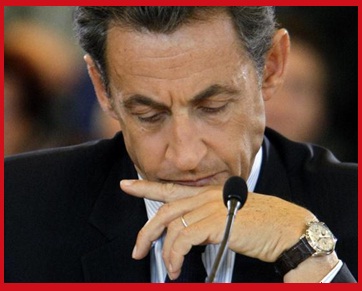
As the saying goes; "the devil is in the details". The Euro-zone deficit deal has been structured, but economists, investors and stakeholders know its only the beginning. According to Frances's President, Sarkozy, the legal parameters and compliance for the new accord to reinforce the bailout rules are expected to be worked out before Christmas. The longer it takes to put this put this chapter behind them, the more chance for erosion of confidence, currency, and credit rating.

Back to Home Page

K. Reilly
The Cohn-Reilly Report

www.Facebook.com/Cohn.Reilly

Wednesday, November 23, 2011

Sarkozy's New Challenge: Protecting France's Credit Rating

Given the fact that the European Union's recovery is riding on the full faith and credit of a select few of the strongest union members. Sarkozy ia facing yet another challenge as guardian of France’s credit rating. Particularly in light of fact that France is the primary guarantor for the bailout program.

Hope for an improved fiscal outlook for both Greece and Italy, allowed markets to exhale this month. This was fueled by the progress Greece made toward naming a new president, and the new bail-out plan. Many markets have already made back much of the losses over the past few months, but volatility continues to be a concern. Attention was temporarily transferred away from Greece, and the growing concern about Italy after S&P erroneously issued a warning that they may downgrade France’s rating. In an instant, the overly sensitive market reacted, resulting in higher bond yields for France’s debt, marking a 4 month high.

For the bailout to work, the euro-zone requires other triple -A nations to step up and increase their guarantees. The bailout fund is structured to hold a triple-A-rating, but this is based on the underlying strength of France’s credit rating. France is the second largest economy in the European Union, following German. However, as far as the resolution to the EU fiscal crisis, France is the blue-chip guarantor - representing the Union’s ability to navigate themselves out of the financial hole. Accordingly, a reduced rating France, will undoubtedly have an impact on the firepower of the fund.
Frances President, Sarkozy, has made it his mission to protect France’s credit rating. The Wall Street Journal reported that Sarkozy’s has made guarding their Triple-A credit rating a “battle ground for the coming presidential elections in the spring” Sarkozy unveiled, not one, but two austerity packages since late august in an effort to signal to investors that France can and will meet its deficit targets.

Back to Home Page

K. Reilly
The Cohn-Reilly Report
www.Facebook.com/Cohn.Reilly

Tuesday, November 8, 2011

Corzine's Blind Ambition: The Collapse of MF Global

MF Global is essentially in ICU, and nothing short of a miracle will save the company as we know it. Who was at the wheel when the company crashed and burned last week? Corzine. Corzine, former governor of New Jersey, who was once the head of Goldman Sachs, went back to his roots on Wall Street to head MF Global. As CEO of MF Global, Corzine, built the company to $41 billion business. It sounds like another Wall Street dream, but this success story, quickly turned into a nightmare, for the company and for its CEO.

The announcement came Thursday, November 3rd, that Corzine is stepping down as CEO on the heels of an investigation of the company’s unraveling. Their troubles started when the European crisis began to impact the company’s bottom line, since MF Global was heavily invested in European bonds.

MF Global is the first big financial company to tank at the hands of the Euro -crisis. The company’s Partners pulled back with increased concerns about their Euro bond exposure, which descended into a severe cash deficiency. MF Global’s investment in Spain, Italy and Portugal bonds had amassed to $6 billion in debt. The firm’s stock declined 66% last week when the company reported its worst quarterly losses ever. Meanwhile,the transatlantic continent’s gloomy future is hanging in balance, and sure to bring MF Global to its knees. The swift sell-off of its stock precipitated the company filing for bankruptcy. To put this horror story in perspective according to bankruptcydata.com, the MF Global bankruptcy filing is the 8th-biggest financial institution in the US, placing them over Chrysler, (in 2009), but smaller than Lehman Brothers.

It is beginning to appear that Corzine set out to redefine MF Global's Business Model, and aggressively redirect the company’s focus and trading objectives in an effort to create his own Goldman Sachs. He wanted to build an international empire, only he failed to consider the global economic mayhem, and particularly the crisis unfolding across the Atlantic, where Corzine wanted to heavily invest. The financial discord in Europe was no secret, so what was he thinking? A cocktail of insatiable greed and ambition tends to have a blinding effect on the soul.

Behind the scenes, the Wall Street Journal reported that MF Global was seeking investors or buyers to alleviate the cash crunch. But alas, there were no takers and unfortunately no alternatives emerged before the regulators’ deadline. The company was subsequently delisted. This is a classic case of an overly eager, unethical CEO with his own agenda. The level of ambition and arrogance was so steep, it apparently impaired his ability to lead with the company's best interest at heart. Meanwhile, nearly a thousand people will be out of work in a couple of weeks, just in time for Thanksgiving. The bright side is that many of the employees will continue with their lives and eventually find stability, but Corzine is finished - both politically and professionally.

Given the anti-Wall St. sentiment, I was not surprised to learn that Corzine declined a $12 million severance pay. No matter how you choose to spin this fact, his decision to walk away from millions of dollars he was entitled to, speaks volumes.


K. Reilly
The Cohn-Reilly Report

Thursday, November 3, 2011

PM Papandreou: Biting the Hand that Feeds Him

The world collectively let out a sign of relieve when the news broke that an agreement was reached to resolve the faltering Greece economy. The Eurozone Finance Ministers gathered in Brussels to discuss the Greek debt problem, fully aware that the political and economic impact reaches well beyond the Eurozone. The US market responded to the news closing in positive territory after two days of three digit losses. We were barely able to process the news when word began to circulate about the seemingly ungrateful Prime Minister , had decided to conduct a referendum vote for the bailout proposal, and – to add insult-to-injury, the PM George Papandreou was contemplating leaving the Euro zone.

Just days away from defaulting on its debt, at a 160% of its GDP, you can only imagine the what was going through Sarkozy and Merkel’s heads. As was said to be Greece preparing to conduct a vote on the bail-out resolution, the dynamic duo (Sarkozy and Merkel) reacted to the new, and administered intense pressure for PM George Papandreou to make a swift decision as to Greece’s fate with the EU. Political pressure from around the world forced George Papandreou abandon the idea of conducting a bailout vote.

As details concerning the highly anticipated bailout program began to emerge, analysts and economist wasted no time weighing in. To attempt an overly simplified description, In order to dig Greece of its financial hole, the member Banks will also have to take on some of the losses, along with bond holders, who will be contacted as to how deep the losses will be. I will research the detail of the bailout plan what is said to aid Greece to reduce its growth-to-debt ratio from 140% to 120% by 2010.

Back to Home Page

K. Reilly
The Cohn-Reilly Report


Monday, October 31, 2011

$700 Million Bank Heist: SEC Investigates Citibank

Did Citbank swipe $700 million from investors? Well according to an SEC filing, which alleges that Citibank sold securitized housing bonds, which they knew were sub-standard, and bet against them, something is definitely amiss. It’s easy to see why Banks are no longer seen as a safe place to invest your money, as a depositor or shareholder.

Citibank, being charged with fraud, is fighting the charges, but Recommended settlement of $285 million is likely going to stick. The SEC asked a federal judge to approve the amount, citing that $285 million would not unfairly punish the shareholders, who were essentially victims of the bank's unethical acts. Of the $285 million, the settlement breaks down as follows: $95 million is the fine, $160 million in for ill-gotten profits and $30 million in interest. We're about 18 months post signing of the Finance Reform Bill, and we're still unraveling the spoils of unbridled greed.

The national Occupy Wall Street Protest was founded on just this type of offensive conduct. I had a feeling that the near collapse of our financial markets in 2008 was the tip of the iceberg, and so far it has proven to be true.

Back to Home Page

K.Reilly
The Cohn-Reilly Report

Friday, October 14, 2011

Netflix: Losing Its Grip

In business, being the first to market an product or service places the company (market leader) at a huge advantage over those that follow in their footsteps. Research has shown that market leaders are likely to maintain the lion's share of the market for decades. Of course, there are exceptions to every rule; and Netscape was one of the unlucky market leaders that was not able to hold its edge over followers. That said, Netflix may prove to be another such exception to the rule if they are not careful.
Netflix is still recovering from the summer debacle, where they raised their fees 60% and attempted to separate the physical DVD rental business, from the streaming videos business. The strategy to shift their business model was ill-fated. The response to the announcement should have given them all the warning they needed not to move forward with the plan. The idea probably sounded brilliant in the boardroom, but it was obviously not founded on solid research, or customer surveys. In roughly three months time, Netflix stock price dropped 36% to $115 per share. To put it in perspective, on July 7th. Netflix stock sold for $292 a share. That is quite a fall from grace.
Netflix reported a loss of 800,000 subscribers in the 3rd quarter. Analysts predicted a loss of 600,000, which had caused the stock to swiftly decline 20%. The company warned of more defections and stated that they anticipate losses for the first quarter of 2012 as a result of expanding their business to Europe. In the meantime, RedBox is enjoying the flood of subscribers looking for refuge from Netflix who took their loyalty for granted.

Netflix‘s short sightedness, is clearly a result of both lack of due diligence and arrogance. Hastings, founder and CEO of Netflix had the vision and leadership to innovate and steer the company to tremendous success, so what happened? It is hard to believe it the same person at the helm steering the company recklessly away from its customers. The loyal, or stubborn shareholders that choose not to dump the stock are looking for an explanation. The public apology did eventually come from Hastings, but the damage was already done. As they say, you can’t un-ring a bell. I am willing wage a bet this debacle has already become a "what not to do" lesson that will be remembered by Hastings, and board of directors for years to come. It will be interesting to see what strategy the company will implement for damage control, and rebuilding its US customer base.

Back to Home Page

K. Reilly
The Cohn-Reilly Report

Monday, October 3, 2011

Job Stability & Economic Recovery May be a Long Way Away

The economic uncertainly is beginning to take root, and override any hope we may have had for a full economic recovery. Consumer confidence is at its lowest levels in two years, while corporations sit on their cash. The global financial discord is helping to fuel the fluctuating uncertainly. For the most part, the fiscal and monetary policies implemented to stimulate the economy have been lack luster. The high priced stimulus packages have fizzled out, amounting to inadequate results. What the average American doesn’t know is that these same programs would have worked famously under different economic circumstances.
The Financial crisis in the US and around the world, is far deeper than first realized. Neither the Bush Administration nor the Obama Administration were prepared for what we are facing today. The republicans can use the market fears and crawling economy for their political gain, but I dare say that NO Chief Executive in the white house, Democrat, or Republican, Black or White, would have gotten the U.S. economy moving any faster. What’s worse is that none of the world leaders appear to be willing to admit to their constituents or the world how bad finances are in their country. If the world leaders are not being completely transparent about the extent of their country’s fiscal troubles, we may never really know the depth of the financial crisis, or the optimal approach to repairing it.

Many of the economic indicators appear to be slightly off kilter, and the market seems disconnected to what's going on - particularly when you consider that corporations are reporting historically high profits for this year. All the while, Capitalism is struggling to save face, with an obscene number of fraud investigations and trading scandals coming out of the woodwork. It makes one wonder if capitalism and greed come as a two-for-one package deal, or if it's actually possible to have the presence of capitalism in a low percentage of fraud. The good news is we're not the only continent on the planet threatened with financial discord. The bad news is, we’re not the only continent on the planet threatened with financial discord. This is a complex, unprecedented situation we’re have here. In essence we have a global recession on steroids, so it’s going to take a combination of high octane, super powered fiscal and monetary programs to get the U.S. economy off life support.

Back to Home Page

K. Reilly
The Cohn-Reilly Report